

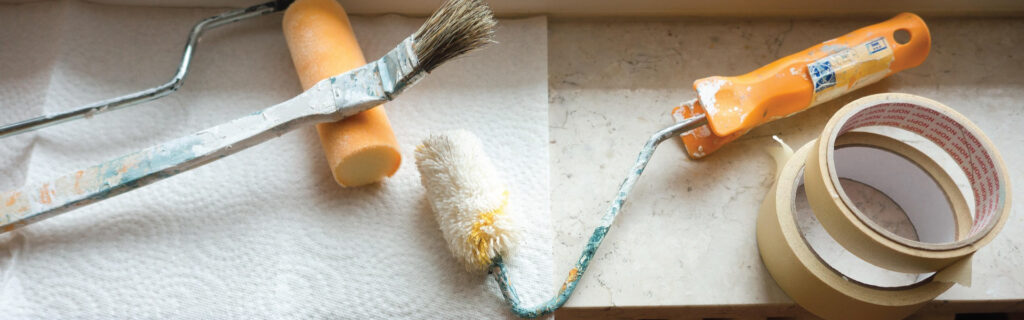
Whether you are a professional painter or a do-it-yourselfer, having the proper painting equipment can make all the difference. Proper instruments not only increase efficiency, but also provide a professional appearance. From brushes to protective gear, every piece of equipment is essential for producing high-quality results.
1. Paint Brushes
Paintbrushes are one of the most basic and essential pieces of painting equipment. They come in a variety of sizes and forms, each ideal for a certain activity.
Flat brushes are ideal for big, smooth surfaces like walls and doors.
Round brushes are ideal for intricate work, corners, and edges.
Angled brushes provide precision and are typically used for trimming or moulding.
When choosing a brush, keep the type of paint in mind. Synthetic bristles function well with water-based paints, whereas natural bristles work well with oil-based paints.
2. Rollers
Rollers are essential for covering big areas rapidly. They consist of a handle and a cylindrical sleeve that absorbs and evenly distributes paint.
Short nap rollers work best on flat surfaces such as plaster or plasterboard.
Medium Nap Rollers are ideal for semi-smooth surfaces.
Long nap rollers are designed for textured surfaces like as stucco or masonry.
Using a roller tray and liner improves paint flow and makes cleanup easier.
3. Paint sprayers
Paint sprayers are ideal for larger jobs or professional applications because they provide fast and even coverage. There are different types:
Airless Sprayers: Paint is atomised using high pressure and is appropriate for use on walls, fences, and outdoor surfaces.
HVLP (High Volume Low Pressure) Sprayers: These sprayers provide fine control while reducing overspray, making them perfect for cabinets and furniture.
Paint sprayers are effective, but they require prior preparation, such as masking and protective coverings.
4. Paint trays and buckets
Paint trays and buckets are simple yet necessary items. They make it easy to obtain paint and reduce spills. Trays with textured surfaces make it easier to load rollers uniformly. For larger operations, paint buckets with handles or pour spouts are more convenient.
5. Protective Equipment
When working with paints and chemicals, it is critical to practise safety. The following equipment ensures your safety:
- Gloves protect your hands from chemicals and stains.
- Masks or respirators: Avoid inhaling dangerous vapours, particularly when spraying.
- Goggles protect your eyes from splashes.
- Wear coveralls or aprons to keep your clothes clean while working in a filthy environment.
- Investing in high-quality protective gear is critical for safety and comfort.
6. Sanding and Surface Preparation Tools
Proper surface preparation guarantees a smooth and long-lasting finish. Tools include:
- Sandpaper is available in a variety of grades for smoothing surfaces before painting.
- Sanding blocks or machines provide faster and more consistent sanding.
- Scrapers and Putty Knives: Remove old paint, fix holes, and smooth out flaws.
- Clean, well-prepared surfaces reduce peeling and improve paint adhesion.

7. Ladders & Scaffolding
To safely reach high regions, robust ladders or scaffolding are required.
Step ladders are best suited for modest to medium heights.
Extension ladders are useful for reaching taller walls or exteriors.
Scaffolding ensures stability and access for large-scale projects.
Always observe safety recommendations and keep your ladder or scaffold on a sturdy surface.
8. Miscellaneous tools
Other useful devices include:
- Painter’s tape provides neat edges and protects surfaces.
- Drop Cloths: Protect your floors and furnishings from spills.
- Mixing Sticks: Before applying the paint, ensure that it is evenly blended.
- Paint Can Openers: Make opening cans easier while reducing damage.
- Even small tools can help improve the efficiency and quality of your paint work.
Frequently Asked Questions (FAQ)
Q1: What is the most essential painting equipment for beginners?
A good collection of brushes, rollers, paint trays, and protective equipment is required for every beginning.
Q2: How do I choose between brushes and rollers?
A: Brushes are ideal for detailed areas and edges, whereas rollers cover big flat surfaces easily.
Q3: Are paint sprayers appropriate for household projects?
A: Yes, however they require preparation and masking to avoid overspray. HVLP sprayers are best suited for modest jobs.
Q4: How frequently should I clean my painting tools?
A: Brushes, rollers, and sprayers should be cleaned after each use to ensure their longevity and performance.
Q5: Can I use the same tools for oil and water based paints?
A: For the greatest results, use synthetic brushes for water-based paints and natural bristle brushes for oil-based paints.
Conclusion
Investing in quality painting equipment is essential for producing professional results. Brushes and rollers, as well as safety clothing and surface preparation tools, all help to make painting easier, faster, and safer. Whether you’re working on a tiny DIY project or a large-scale professional task, having the correct tools assures efficiency, precision, and pleasure with the end result.
Contact Paintcor for more information.
See also:
Garage Floor Paint: Transform Your Garage with Style
Floor Paint South Africa: Transform Your Floors with Ease
Floor Paint Colours in South Africa: Stylish & Durable Choices